

+919733312385
Home About us Plants Gallery Enquiry Join us Contact us
   
Plants    

Cymbidium

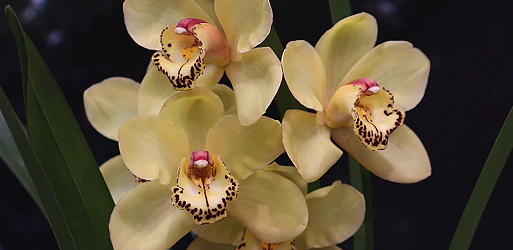
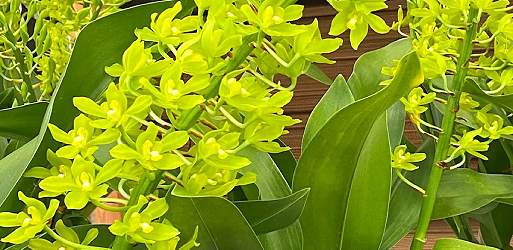
Cymbidium plants are sympodial and grow to a height of 60 cm and the racemes as high as 90 cm. The raceme grows from the base of the most recent pseudobulb. Each flower can have a diameter of 5 to 10 cm, according to the species. They bloom during the winter, and each plant can have up to fifteen or more flowers. The fantastic range of colors for this genus include white, green, yellowish-green, cream, yellow, brown, pink, and red (and there may be markings of other color shades at the same time), but not blue and black. The flowers last about ten weeks. They have a waxy texture. The rounded sepals and petals have about the same dimensions. They show very diverse color patterns, different for every species.(read more in article page)

Gerbera

Gerbera L. is a genus of ornamental plants from the sunflower family (Asteraceae). It was named in honor of the German naturalist Traugott Gerber, a friend of Carolus Linnaeus.[1]
It has approximately 30 species in the wild, extending to South America, Africa and tropical Asia. The first scientific description of a Gerbera was made by J.D. Hooker in Curtis's Botanical Magazine in 1889 when he described Gerbera jamesonii, a South African species also known as Transvaal daisy or Barberton Daisy.
Gerbera species bear a large capitulum with striking, two-lipped ray florets in yellow, orange, white, pink or red colors. The capitulum, which has the appearance of a single flower, is actually composed of hundreds of individual flowers. The morphology of the flowers varies depending on their position in the capitulum. The flower heads can be as small as 7 cm (Gerbera mini 'Harley') in diameter or up to 12 cm (Gerbera ‘Golden Serena’).

Anthurium

Anthurium (Schott, 1829), is a large genus of about 600- 800 (possibly 1,000) species, belonging to the arum family (Araceae). Anthurium can also be called "Flamingo Flower" or "Boy Flower", both referring to the structure of the spathe and spadix.
TROPICOS lists 1901 types, although some of these are duplicates. It is one of the largest and probably the most complex genus of this family; certainly it is one of the most variable. Many species are undoubtedly not yet described and new ones are being found every year. The species has neotropical distribution; mostly in wet tropical mountain forest of Central America and South America, but some in semi-arid environments. Most species occur in Panama, Colombia, Brazil, the Guiana Shield and Ecuador. According to the work of noted aroid botanist Dr. Tom Croat of the Missouri Botanical Garden, this genus is not found in Asia.[2] Some species have been introduced into Asian rain forests, but are not endemic.

Lilium

The genus Lilium are herbaceous flowering plants growing from bulbs. Most species are native to the temperate northern hemisphere. They comprise a genus of about 110 species in the lily family (Liliaceae).
They are important as large showy flowering garden plants.[1] Additionally, they are important culturally and in literature in much of the world. Some species are sometimes grown or harvested for the edible bulbs.
The species in this genus are the true lilies. Many other plants exist with "lily" in the common English name, some of which are quite unrelated to the true lilies.
follow us:
  Share Objectives | Services | Management | Plants | Article | Enquiry | Join us | Contact us  
© 2010-2011 Darjeeling Gardens. All rights reserved. | Powered By Krishna Tech.